Stop Iguanas Before They Settle In
Iguana Exclusion and Prevention Solutions in Miami
After removing iguanas from your Miami property, the next concern is whether they'll return. If your yard has seawalls, dense landscaping, or open access to water, iguanas will keep coming back unless you block their entry points and remove what attracts them. Iguana Jones Removal Service provides exclusion and prevention measures designed to reduce long-term iguana activity at properties in Miami and surrounding areas.
This service focuses on solutions that go beyond one-time removal. You'll receive a customized plan that addresses vulnerabilities specific to your property, including seawall barriers, landscaping adjustments, and monitoring schedules. The goal is to limit iguana access to areas where they burrow, feed, or nest. Many clients combine this work with ongoing maintenance plans to keep iguanas from re-establishing themselves.
If you want to reduce the chance of repeat iguana problems in Miami, schedule a prevention assessment with Iguana Jones Removal Service.
What Goes Into a Prevention Plan
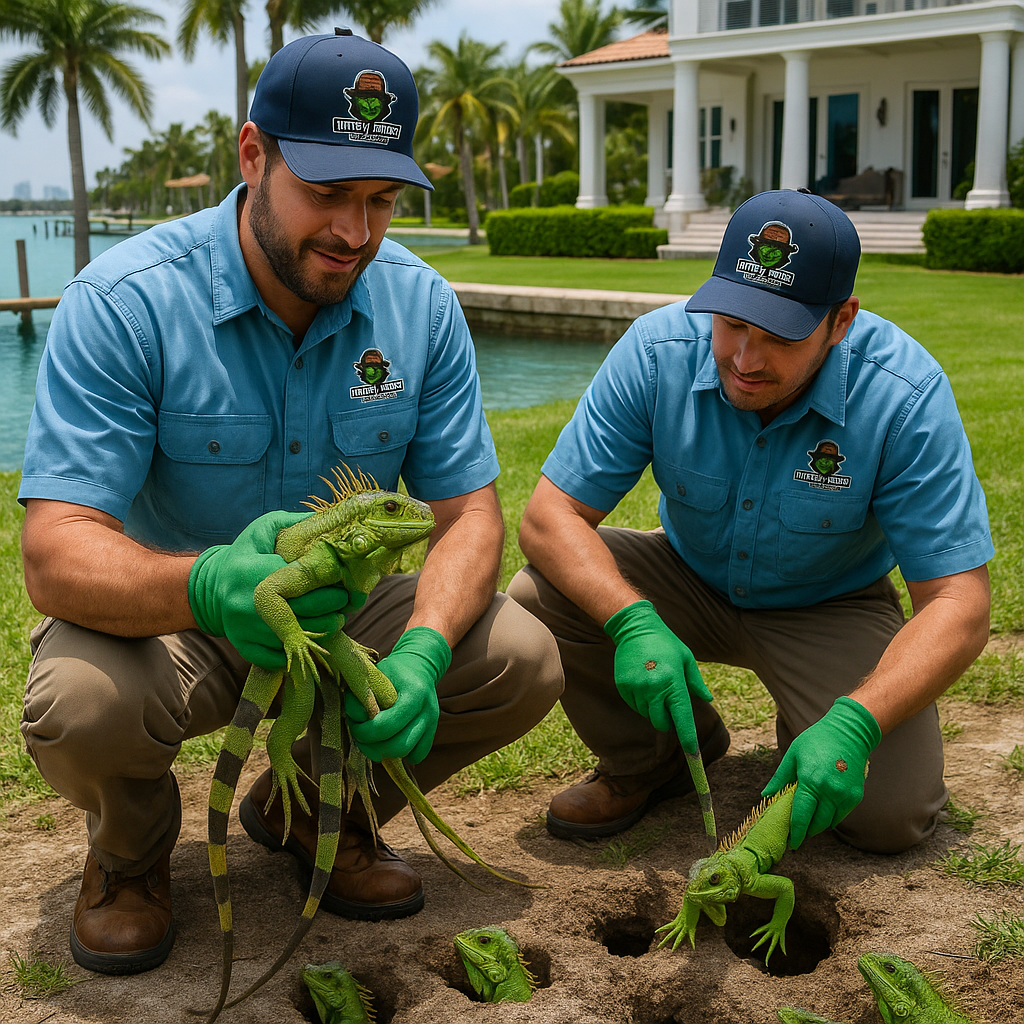
A prevention assessment in Miami starts with identifying where iguanas enter, feed, and hide on your property. Technicians look at seawalls, fences, vegetation, and water access. They recommend barriers such as mesh wraps, rock adjustments, or plant removal based on what they observe. Some plans include habitat modification like trimming fruit trees or relocating dense ground cover.
After exclusion work is completed, you'll notice fewer iguanas near vulnerable areas and reduced signs of burrowing or nesting. Plants that were repeatedly damaged start recovering, and droppings along pathways decrease. The property becomes less attractive to new iguanas looking for territory.
This service does not eliminate every iguana from your neighborhood, but it makes your property a less appealing option. Some exclusion measures require periodic maintenance, especially after storms or landscape changes. Follow-up visits help ensure barriers stay effective and catch new activity early.
Most People Have Questions About Prevention Work
Homeowners and property managers often want to know what exclusion involves, how long it lasts, and whether it works before committing to prevention measures.
If you're ready to protect your Miami property from repeat iguana activity, contact Iguana Jones Removal Service to set up a prevention assessment and discuss long-term solutions.